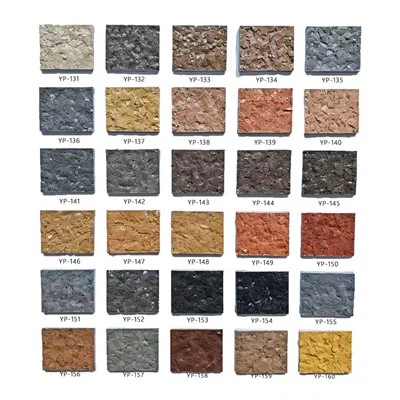
Porosity is a crucial characteristic that influences the performance and applications of various materials, including travertine effect rock chips. As a supplier of travertine effect rock chips, I am often asked whether these chips have high or low porosity. In this blog post, I will delve into the concept of porosity, explore the factors affecting the porosity of travertine effect rock chips, and discuss the implications of their porosity for different applications.
Understanding Porosity
Porosity refers to the ratio of the volume of pores in a material to its total volume. Pores can be either open or closed. Open pores are connected to the surface of the material, allowing fluids and gases to penetrate, while closed pores are isolated within the material. The porosity of a material can significantly affect its physical and chemical properties, such as its strength, durability, water absorption, and resistance to chemical attack.
Factors Affecting the Porosity of Travertine Effect Rock Chips
The porosity of travertine effect rock chips is influenced by several factors, including the composition of the raw materials, the manufacturing process, and the finishing treatments.
Composition of Raw Materials
Travertine is a type of limestone formed by the precipitation of calcium carbonate from groundwater. The porosity of natural travertine can vary depending on its geological origin and the presence of impurities. Travertine effect rock chips are typically made from a mixture of natural and synthetic materials, which can also affect their porosity. For example, if the chips contain a high proportion of porous natural travertine, they are likely to have higher porosity.
Manufacturing Process
The manufacturing process of travertine effect rock chips can also impact their porosity. During the production process, the raw materials are crushed, screened, and treated to achieve the desired size and shape. The way the chips are formed and the pressure applied during manufacturing can influence the number and size of pores within the chips. For instance, if the chips are compressed under high pressure, the pores may be reduced, resulting in lower porosity.
Finishing Treatments
Finishing treatments, such as sealing and coating, can also affect the porosity of travertine effect rock chips. Sealing agents can fill the open pores on the surface of the chips, reducing their water absorption and improving their resistance to stains and chemicals. Coating treatments can provide an additional layer of protection, further enhancing the durability and performance of the chips.
High or Low Porosity: Implications for Applications
The porosity of travertine effect rock chips has significant implications for their applications. High-porosity chips are more absorbent and can be more prone to staining and damage from moisture. However, they also offer better breathability, which can be beneficial in certain applications, such as in interior wall cladding where moisture needs to be released.
On the other hand, low-porosity chips are less absorbent and more resistant to staining and moisture damage. They are ideal for applications where durability and low maintenance are required, such as in exterior paving and high-traffic areas.
Applications of Travertine Effect Rock Chips
Travertine effect rock chips are widely used in various applications, including interior and exterior decoration, landscaping, and construction. Here are some common applications and how the porosity of the chips can affect their performance:
Interior Wall Cladding
In interior wall cladding, high-porosity travertine effect rock chips can provide a natural and rustic look. The breathability of the chips allows moisture to escape, preventing the growth of mold and mildew. However, they may require more frequent cleaning and maintenance to prevent staining. Low-porosity chips, on the other hand, are more resistant to stains and are easier to clean, making them a good choice for high-traffic areas.
Exterior Paving
For exterior paving, low-porosity travertine effect rock chips are preferred. They are more resistant to water damage, freeze-thaw cycles, and abrasion, ensuring long-term durability. High-porosity chips may be more prone to cracking and damage in harsh weather conditions.
Landscaping
In landscaping, travertine effect rock chips can be used to create decorative features such as pathways, garden beds, and water features. The porosity of the chips can affect their ability to retain moisture, which is important for plant growth. High-porosity chips can help to keep the soil moist, while low-porosity chips may require more frequent watering.
Our Product Range
As a supplier of travertine effect rock chips, we offer a wide range of products to meet the diverse needs of our customers. Our Multi-color Blending Rock Flakes provide a unique and eye-catching appearance, adding a touch of color and texture to any project. Our Sun Protection Rock Flakes for Exterior are designed to withstand the harsh outdoor environment, protecting against UV rays and fading. And our Flame Resistant Rock Flakes offer an extra layer of safety, making them suitable for applications where fire resistance is required.


Conclusion
In conclusion, the porosity of travertine effect rock chips can vary depending on the composition of the raw materials, the manufacturing process, and the finishing treatments. High-porosity chips offer better breathability but may be more prone to staining and damage, while low-porosity chips are more resistant to moisture and stains. The choice of porosity depends on the specific application and the desired performance.
If you are interested in our travertine effect rock chips or have any questions about their porosity and applications, please feel free to contact us for a detailed discussion. We are committed to providing high-quality products and excellent customer service to meet your needs.
References
- ASTM International. (2023). Standard Test Methods for Determining Porosity and Bulk Density of Dimension Stone. ASTM C97 - 23.
- Smith, J. (2022). Porosity and its Impact on the Performance of Building Materials. Journal of Building Science, 45(3), 123 - 135.
- Brown, A. (2021). Travertine: Properties, Applications, and Maintenance. Stone Magazine, 22(4), 78 - 85.