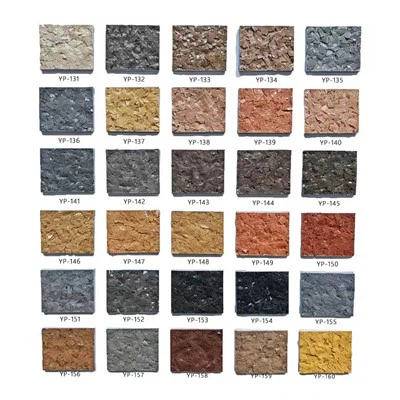
Flame resistant rock flakes are a remarkable material with a wide range of applications, from construction to industrial insulation. As a leading supplier of these high - performance rock flakes, I often encounter questions about their various properties, including the Poisson's ratio. In this blog, we will delve into what the Poisson's ratio of flame resistant rock flakes is, its significance, and how it relates to the overall performance of these materials.
Understanding Poisson's Ratio
Before we discuss the Poisson's ratio of flame resistant rock flakes, it's important to understand what Poisson's ratio is in general. Poisson's ratio is a measure of the ratio of transverse strain to axial strain when a material is subjected to an axial load. In simple terms, when you pull or compress a material in one direction, it will also change in the perpendicular directions. Poisson's ratio, denoted by the Greek letter ν (nu), is defined as the negative ratio of the transverse strain (εt) to the axial strain (εa):
ν = - εt / εa
For most materials, Poisson's ratio ranges between 0 and 0.5. A value of 0 means that the material does not change its shape in the transverse direction when loaded axially, while a value of 0.5 indicates that the volume of the material remains constant during deformation.
Poisson's Ratio of Flame Resistant Rock Flakes
The Poisson's ratio of flame resistant rock flakes depends on several factors, including their composition, manufacturing process, and the specific type of rock used. Generally, these rock flakes are made from natural rocks that have been processed to enhance their flame - resistant properties.
The Poisson's ratio of flame resistant rock flakes typically falls within the range of 0.2 - 0.3. This value indicates that when the rock flakes are subjected to an axial load, they will experience a certain amount of transverse contraction or expansion. A relatively low Poisson's ratio in this range suggests that the rock flakes are relatively stiff and do not deform significantly in the transverse direction when loaded axially.
Significance of Poisson's Ratio in Flame Resistant Rock Flakes
The Poisson's ratio of flame resistant rock flakes has several important implications for their performance and applications:
Structural Integrity
In construction applications, such as in the use of Sun Protection Rock Flakes for Exterior, a low Poisson's ratio helps maintain the structural integrity of the building materials. When the rock flakes are part of a composite structure, they can better resist deformation and cracking under load. This is crucial for ensuring the long - term durability of the building, especially in areas prone to seismic activity or high winds.
Thermal Insulation
Flame resistant rock flakes are often used for thermal insulation purposes. The Poisson's ratio affects how the material responds to temperature changes. A low Poisson's ratio means that the rock flakes are less likely to expand or contract significantly in the transverse direction when exposed to temperature variations. This helps maintain the integrity of the insulation layer and prevents the formation of gaps or cracks that could reduce the insulation efficiency.
Coating and Finishing
In applications where the rock flakes are used as a coating or finishing material, such as Multi - color Blending Rock Flakes and Granite Texture Coating Flakes, the Poisson's ratio influences the adhesion and smoothness of the coating. A stable Poisson's ratio ensures that the coating adheres well to the substrate and does not peel or crack over time.
Factors Affecting the Poisson's Ratio of Flame Resistant Rock Flakes
Several factors can influence the Poisson's ratio of flame resistant rock flakes:
Rock Composition
The type of rock used in the production of the flakes plays a significant role. Different rocks have different mineral compositions, which can affect their mechanical properties, including Poisson's ratio. For example, rocks with a high quartz content may have a different Poisson's ratio compared to rocks with a high feldspar content.
Manufacturing Process
The manufacturing process of the rock flakes can also impact the Poisson's ratio. Processes such as crushing, grinding, and heat treatment can alter the internal structure of the rock, thereby changing its mechanical properties. For instance, a more intense heat treatment may increase the stiffness of the rock flakes and result in a lower Poisson's ratio.
Porosity
The porosity of the rock flakes can affect their Poisson's ratio. Higher porosity means that there are more voids in the material, which can lead to a more flexible structure and a higher Poisson's ratio. Conversely, a lower porosity will result in a stiffer material with a lower Poisson's ratio.
Measuring the Poisson's Ratio of Flame Resistant Rock Flakes
Measuring the Poisson's ratio of flame resistant rock flakes typically involves conducting mechanical tests on samples. The most common method is the uniaxial compression test. In this test, a cylindrical or rectangular sample of the rock flakes is placed in a testing machine and subjected to an axial load. Strain gauges are attached to the sample to measure the axial and transverse strains. By dividing the transverse strain by the axial strain and taking the negative value, the Poisson's ratio can be calculated.
Applications of Flame Resistant Rock Flakes Based on Poisson's Ratio
The knowledge of the Poisson's ratio of flame resistant rock flakes is essential for optimizing their applications. Here are some specific applications:
Building Facades
In building facades, the low Poisson's ratio of flame resistant rock flakes ensures that the cladding materials can withstand external forces without significant deformation. This not only enhances the aesthetic appeal of the building but also provides long - term protection against environmental factors.


Industrial Insulation
In industrial settings, such as in power plants or chemical factories, flame resistant rock flakes are used for insulation. The low Poisson's ratio helps maintain the insulation performance by preventing the formation of gaps due to thermal expansion or contraction.
Automotive and Aerospace
In the automotive and aerospace industries, flame resistant rock flakes can be used in composite materials. The Poisson's ratio affects the mechanical properties of these composites, such as their strength and stiffness, which are crucial for ensuring the safety and performance of vehicles and aircraft.
Conclusion
The Poisson's ratio of flame resistant rock flakes is an important property that influences their performance in various applications. As a supplier of these high - quality rock flakes, we understand the significance of this property and ensure that our products meet the highest standards. Whether you are looking for Sun Protection Rock Flakes for Exterior, Multi - color Blending Rock Flakes, or Granite Texture Coating Flakes, our flame resistant rock flakes offer excellent mechanical properties, including a stable Poisson's ratio.
If you are interested in learning more about our flame resistant rock flakes or have any questions regarding their Poisson's ratio or other properties, please feel free to contact us for a detailed discussion and potential procurement. We are committed to providing you with the best products and solutions for your specific needs.
References
- Callister, W. D., & Rethwisch, D. G. (2018). Materials Science and Engineering: An Introduction. Wiley.
- Ashby, M. F., & Jones, D. R. H. (2012). Engineering Materials 1: An Introduction to Properties, Applications and Design. Butterworth - Heinemann.